
Ancient Light
My Life in Telescopes

The first telescope I ever got was in the mid-60s, for Christmas. I was maybe seven years old. It was stored in a closet of the house for weeks before Christmas Day, wrapped in brown paper. I still remember marvelling at it from the hallway; in my child’s eye it was huge. Because it was kind of pointy at the top, I said it looked a giant pencil, and my parents started calling it that: the giant pencil.
It was a crappy little telescope, but I didn’t know that. All I remember being able to look at was the moon (and on a couple lucky nights the Pleiades), but that was fine with me. I’d spend hours on the gray concrete back porch of our home in Ottumwa, Iowa, looking at the craters and mares. I also pointed it at countless stars, only to learn that stars don’t look very different in telescopes, except a little brighter. I probably lucked into a planet now and then, but didn’t know it. So I kept going back to the moon, and by doing so, I was learning the basics of how to work a telescope. How to point it. How to focus it. How to change lenses. My love of astronomy sprouted from that scope. I have a tattoo of the Pleiades on my forearm in commemoration of those nights.
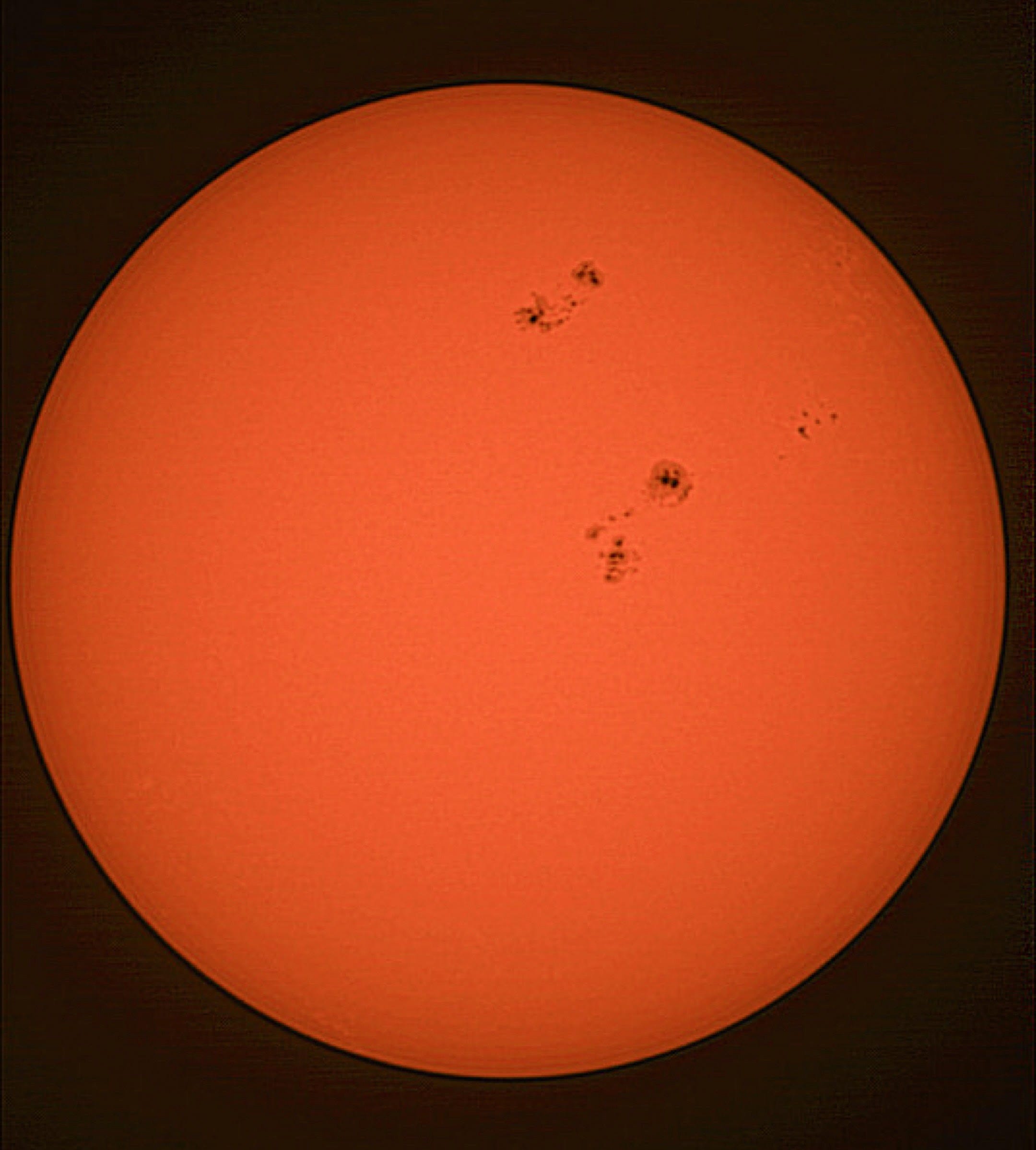
My second telescope is the one I truly fell in love with: my eight-inch Dobsonian reflector. I got it at Mile High Astronomy in Denver (I cannot recommend that store highly enough) in the early 2000s. I had been browsing near the sexy Schmidt-Cassegrains that you controlled with a handset. A women who worked there asked me a few questions about what I was looking for, and then gently steered me away from the fancy computerized scopes. She talked about the tactile sense of moving the scope with your own arms and hands, rather than by the push-buttons on the fancy scopes. She pointed out that a Dobsonian telescope teaches you the sky, in that you have to physically point it at things, rather than trust the computer. She showed me how to use the 3-star alignment simply by estimating (in the middle of the day! inside of a store!) where those three stars would be if it were night.
The Dobsonian scope was also significantly cheaper. She’d purposely steered me away from a pricey model to a cheaper one, selling me down instead of up, because she knew it would be a more satisfying experience (and would gain them a returning customer).
I called it my Big Dumb Telescope. Big, because the tube was 5-ish feet long (taller than my kids!) and about 8 inches wide. You had to carry it around in a big padded case. Dumb, because it had no precision tracking, or even pointing. It sat on a swivel-wheeled dolly, and you’d just roll it around, and raise it up and down, until you found the thing you were looking for. There was a go-to feature that would give you a simple numerical readout about which direction to point it, but you basically just dragged it around until you found your target. I got pretty good at pointing it by line of sight. It taught me the sky.
When I was first married, and the kids were little, I’d sometimes take off for Lake Pueblo after we’d put them to bed. It was a big scope, but it was pretty portable. I’d sit down at the kitchen table with a star book and make a plan of what I wanted to see that night (essential!). After bath time and story time and songs, we’d tuck the kids in bed. I’d pack up the Ouback with the scope, a camp chair, and a couple beers, and take off down Hwy 94 just as night was beginning to fall. I’d find a dark spot devoid of partying teenagers or RVs, set down a camping chair, crack a beer, and set up the scope. You have to manually point it to three different stars to get the numeric go-to to work, so it took awhile.
I didn’t much care about planets, and while the moon was cool, you didn’t want its bright glare in the night sky. I was seriously interested in two things: galaxies and comets. Comets because they were fun, and fleeting, and pretty easy to find. And galaxies because they were just so far away, hundreds of thousands of times farther away than any star shining in the night sky. This was ancient light, heading in your exact direction for millions of years, gathered in a curved mirror, and, after another mirror bounce, shot into a lens to focus it to a eye-sized cirlce of light for you to experience.
Other than the telescope, there is nothing between you and that light. It’s been traveling across the literal universe, just for your eyes. The telescope is simply the vessel for the light.
The feeling I had when I finally caught my first galaxy (the Whirlpool galaxy), is hard to describe. I think of the word thrilling, which leads me to the word enthralled. I was in thrall to the sight of it. It’s akin to being in a church. I cherish the memory of those nights, just me and the telescope and the night sky.
I used that telescope pretty actively for about six years, until life got in the way. I still kept it stored away, but rarely used it. It gathered dust, and didn’t survive our move from Pueblo to Colorado Springs.
Rest in peace, Big Dumb Telescope. You were my astronomical first love.
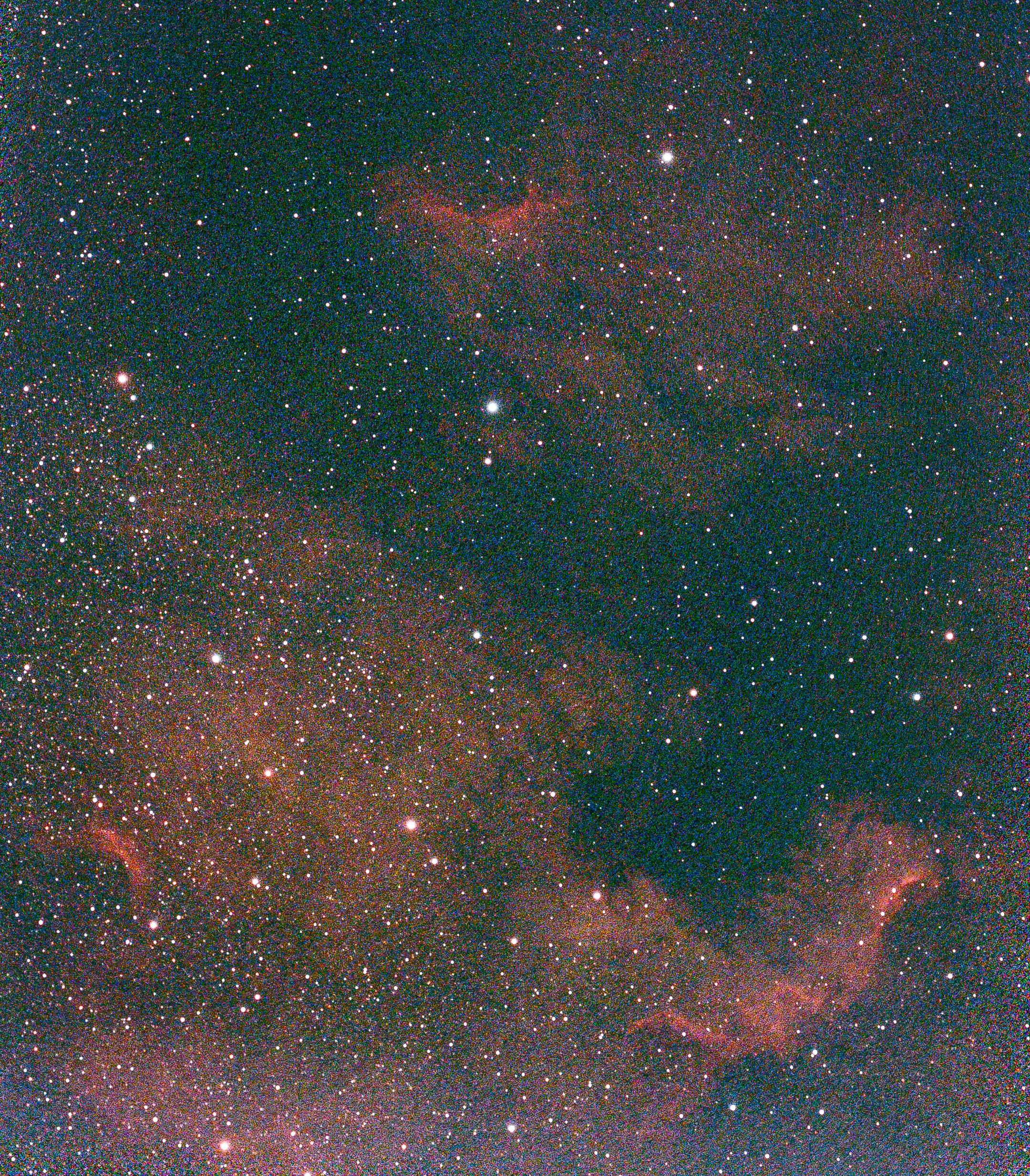
That move from Pueblo to Colorado Springs was no mean feat: my dad, my two teenaged daughters, and way too many books. When it was all said and done, I decided to buy myself a gift: that sexy eight-inch Schmidt-Cassegrain I’d been eyeing at Mile High Astronomy about a decade before. It was too much money to spend on a telescope, but I’d just moved what seemed like heaven and earth. I deserved the scope.
It was a very cool little scope. Huge mirror, good optics, and a go-to feature where you selected a deep sky object and the telescope pointed itself there.
I took it out for a couple nights, early on, and then (almost) never used it again.
I should have listened to the woman from Mile High Astronomy the first time. Pushing a button to slew the telecope just wasn’t very much fun. I didn’t have to do much. I felt disconnected from the night sky. The optics were very good, and the planets and the moon were much crisper than they had been with the BDT, but otherwise, it was boring. The thrill of discovery wasn’t gone, but it had faded.
I lost a bit of my connection to the sky. I looked up at it less and less. I used to always brag that I knew the positions of the four bright planets and the moon, any given night. That ability gradually fell away. My ability to easily point out constellations faded as well.
The telescope, barely used, gathered dust.
My dilemma was this: I didn’t feel like I deserved another telescope, because I had just spent so much money on a very fancy one. How could I justify the cost of a new telescope? I was doomed to use my Schmidt-Cassegrain, or nothing.
Nothing, is where things looked to be headed.
I don’t really buy myself anything, other than laptops when they break down (I’m pretty hard on laptops). Ten years after buying that sexy Schmidt-Cassegrain, I finally bought a new telescope (it only now just occurred to me that I buy a new scope every ten years).
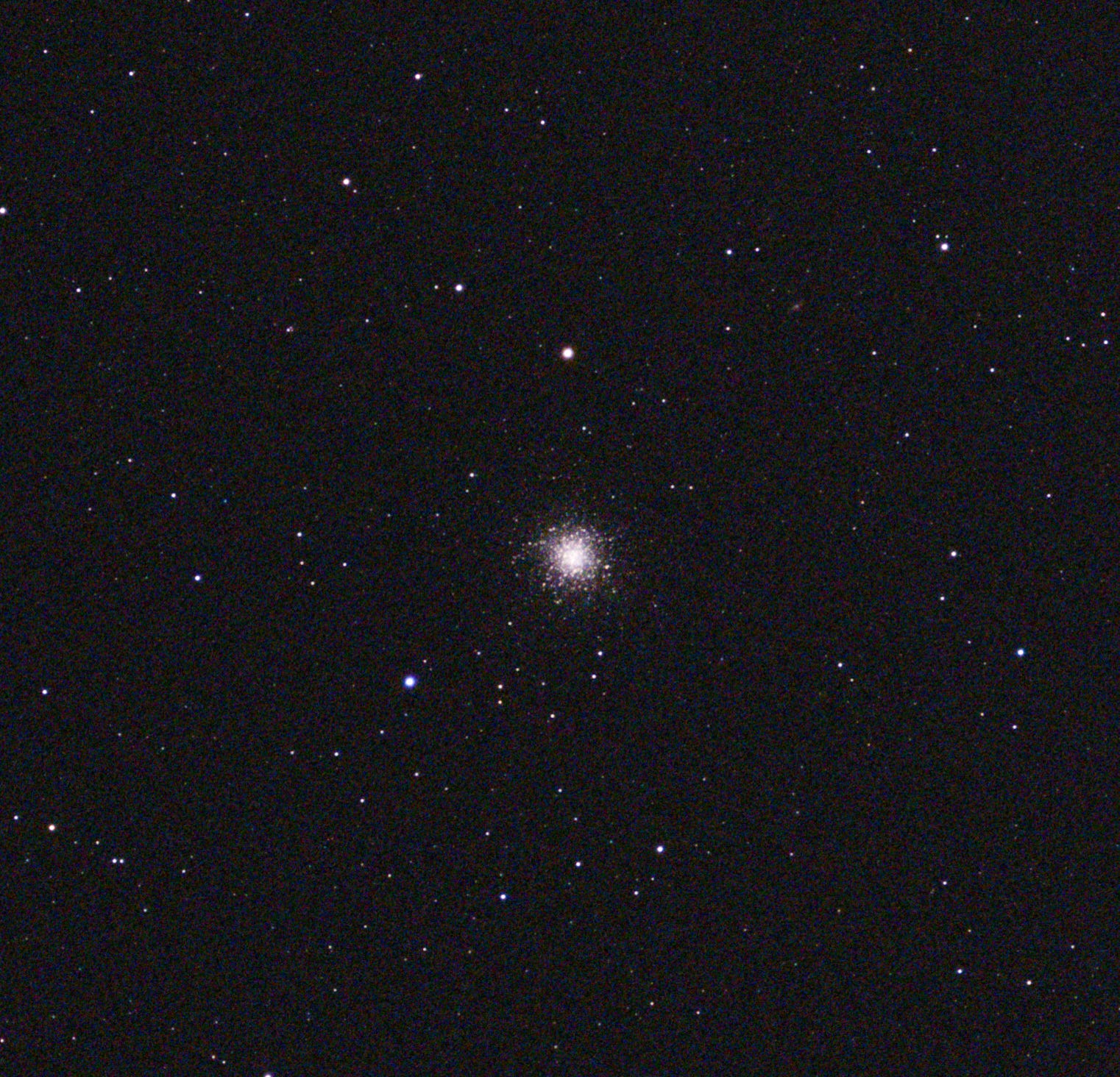
It’s called a smart telescope. They’ve been out for awhile now. Mine is a white box about the size of a toaster. It feels like it dropped out of the future. It’s got a couple of lenses, but to my understanding it’s basically a sensor on a plate, not unlike a digital camera.
The scope follows a deep-sky object across the sky, taking pictures of the sky every few seconds. It stacks the images together, to gradually gather the light necesary to see the details of a nebula or a galaxy. You get to watch the details emerge, ghostlike: the galaxy arms and the dust lanes and the glowing shells of long-dead stars. It’s thrilling.
It’s a true backyard telescope, able to cut through the light pollution of a large city. I’ll take it out to dark skies someday soon, to see what it can REALLY do. Thus far I’ve just set it up in the back yard (or the dog park just beyond), leveled it, plopped down in a lawn chair a few feet away, and controlled it from my iPad.
Yes, the magic of looking through an optical lens—the same basic tool Galileo used 400 years ago—is gone. But some of that magic returns in the way the scope stacks the images, allowing you to watch the image emerge gradually from the dark, and enthrall your imagination.
Look, I admit it, it’s a lazy man’s scope (though as you climb the learning curve it gets more complex). I just put it out in the backyard, turn it on, level it, and point it at something. Sometimes I’ll even go inside, and watch the image form as I do other stuff.
But on nice evenings I often just sit with my scope out in the backyard as dusk fades to dark, and the stars slowly reveal themselves, listening to all the night sounds—crickets chittering, kids laughing, far off music playing—as I watch the night sky slowly revolve overhead, and my scope follow dutifully along. Ancient light gathers at my fingertips, travelling to me from across a stormy sea of time and space, as I sit in a comfortable chair, grass tickling my feet, the night air smelling of pine.
Peace.
Lovely story Mr. Wood. Very moving. It brought me back to that whole time of Mercury and Apollo. My first telescope was a Moonscope, a reflecting telescope, put out by Harmonic Reed Corporation in the 50's and 60's.
I'm going to forward this to my husband who is a telescope freak. Me, I'm still waiting for an alien spaceship to come and pick me up :)